SPOTLIGHT
Reason with a Soul: The Two Courages of C.S. Lewis
By W.J. Locke, November 23, 2025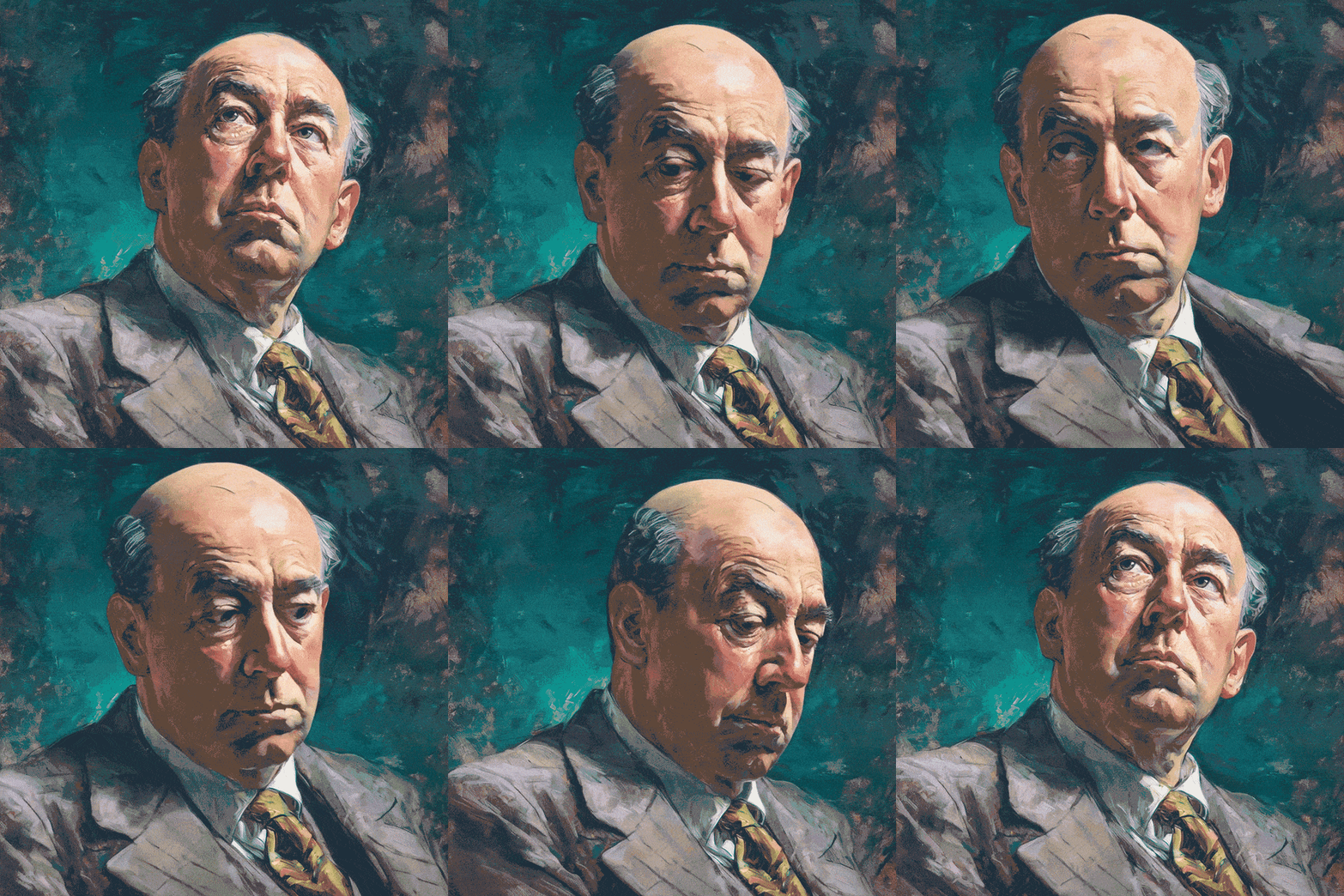
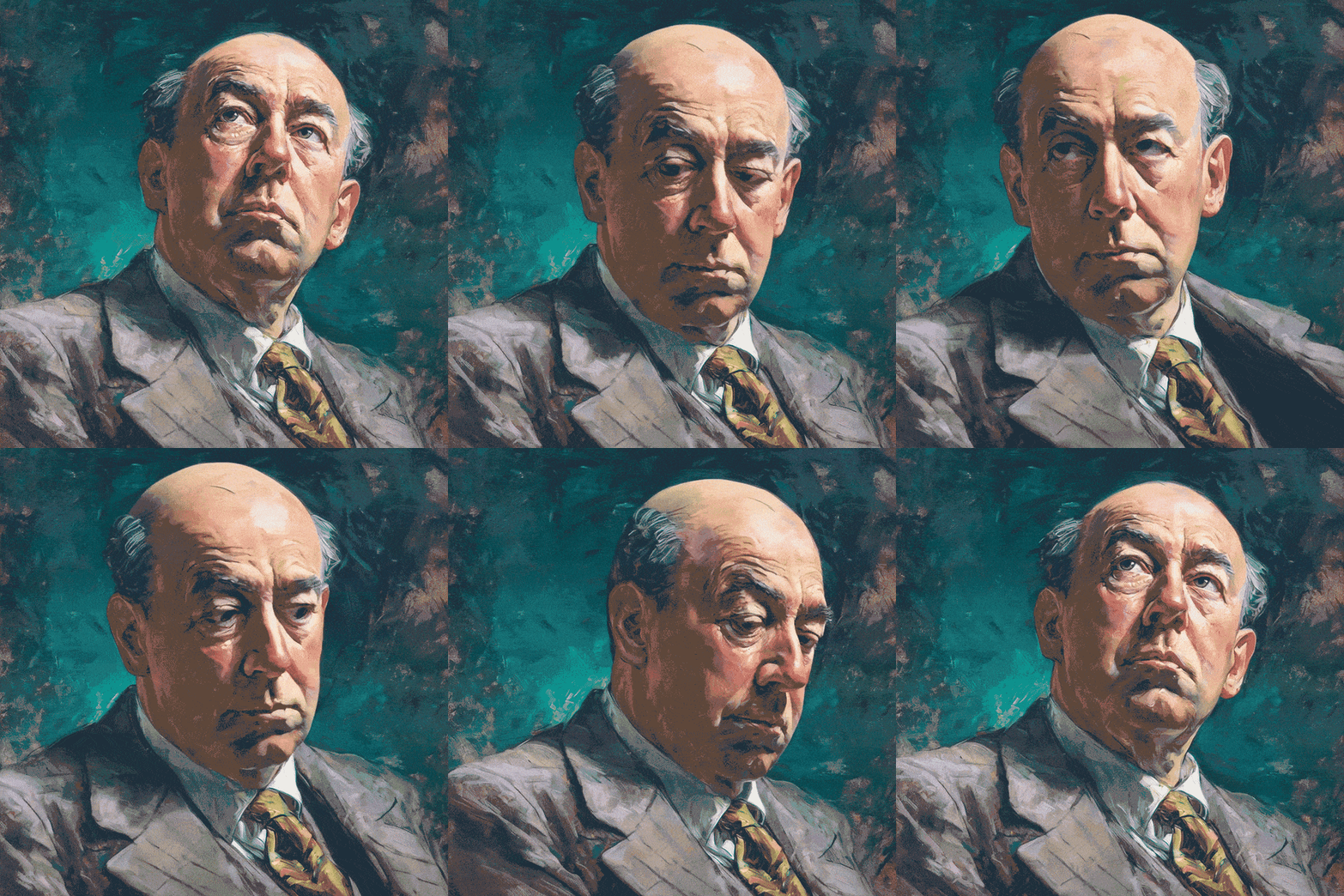
C.S. Lewis29 November 1898 – 22 November 1963C.S. Lewis is beloved by Christians today, but he would likely have made us uncomfortable.
He said faith should unsettle us more than comfort us, and he lived that way. We quote him at rallies and print his words on coffee mugs, but we rarely ask what it cost him to believe what he believed, or to live the way he lived. We love Lewis the apologist, the one who gave us tidy arguments for the existence of God. We're less eager to meet Lewis the practitioner, the man who gave away two-thirds of his income anonymously, who answered letters from strangers daily by hand, who cared for a difficult woman for nearly thirty years without seeking credit or calling it ministry.
“Faith worth having is faith that unsettles you first.”
The gap between the Lewis we celebrate and the Lewis who actually lived reveals something about us. We want his clarity without his sacrifice, his conviction without his humility, his faith without its cost.
Lewis believed that integrity requires two kinds of courage: the courage to pursue truth even when it contradicts your preferences, and the courage to live that truth even when it costs you something. He called courage "the form of every virtue at the testing point." Without it, even our best beliefs collapse under pressure.
In an age of information without wisdom, opinions without sacrifice, and outrage without introspection, Lewis remains a guide. Not because he was perfect, but because he understood that faith worth having is faith that unsettles you first.
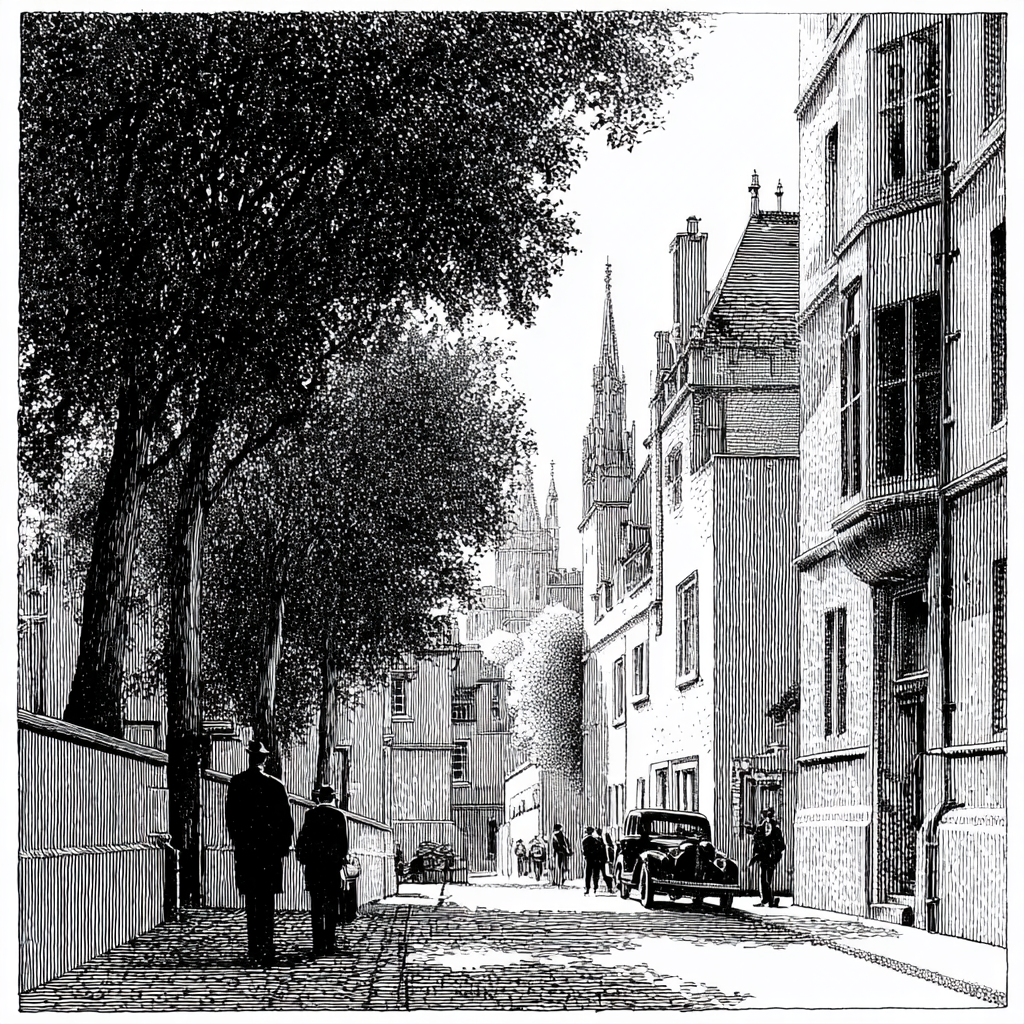
Addison’s Walk at Oxford, where Lewis’s long argument with God began to unravel.The Atheist Who Surrendered
C.S. Lewis did not want God to be real.
By his early twenties, he had settled comfortably into atheism. The universe was material, meaningless, and indifferent. Religion was myth, and myth was beautiful fiction, nothing more. He was content with this. He had his books, his friends, his pipe, and his position at Oxford. There was no gap in his life that needed filling.
But intellectual honesty would not leave him alone.
The problem began with joy: those fleeting moments of longing he experienced while reading or walking, a deep ache for something he could not name. Then came the poets and the myths, which seemed to point beyond themselves. And then came his friendship with J.R.R. Tolkien and Hugo Dyson, who argued late into the night on Addison's Walk that the Christian story was the myth that happened to be true.
Lewis resisted. He examined the arguments, tested them against his atheism, and found his position crumbling. What he wanted to believe no longer matched what the evidence demanded. And so, at age thirty-two, in 1931, he gave in.
He later described his conversion with characteristic honesty: "I gave in, and admitted that God was God, and knelt and prayed: perhaps, that night, the most dejected and reluctant convert in all England."
This is the first kind of courage: intellectual honesty. The willingness to follow truth even when it contradicts your tribe, your comfort, or your plans. Lewis did not become a Christian because it made him happy or gave his life meaning. He became a Christian because he could no longer, in good conscience, deny what he believed to be true.
“Are we willing to follow truth even when it leads us somewhere we didn’t want to go?”
In our age, this kind of courage is rare. We choose teams first and find evidence later. We surround ourselves with voices that confirm what we already believe. We mistake certainty for faith and doubt for weakness. Lewis offers a different model: faith as reasoned surrender, conviction formed through honest struggle, belief that begins with "I wish this weren't true, but I can no longer deny it."
The question he poses to us is simple and uncomfortable: Are we willing to follow truth even when it leads us somewhere we didn't want to go?
The Scholar Who Served
Lewis's intellectual courage brought him to faith. His moral courage kept him there.
Believing something costs little. Living it costs everything. And Lewis lived what he believed in ways most of us would find unbearable.
For nearly thirty years, he cared for Mrs. Janie Moore, the mother of a friend who had died in World War I. She was difficult, demanding, and unrelated to him by blood or marriage. He supported her financially, endured her moods, managed her household, and never once made it public or called it witness. When friends asked why, he said simply that he had made a promise to her son.
He gave away two-thirds of his book royalties, anonymously, to people in need. Strangers wrote to him with spiritual questions, theological confusion, or personal grief, and he answered them daily, by hand. Not because it advanced his career or built his platform, but because they asked and he could help.
He visited hospitals, prisons, and RAF bases during World War II. He housed evacuee children during the Blitz. He lived simply, rejected fame, and refused honorary degrees. When asked to appear on television or tour America, he usually declined. He saw himself as a scholar and a believer, not a celebrity.
This is the second kind of courage: moral practice. The willingness to live what you profess when no one is watching, when it's inconvenient, when it costs you time, money, comfort, or reputation.
“Believing something costs little. Living it costs everything.”
Lewis once wrote, "Courage is not simply one of the virtues but the form of every virtue at the testing point." He meant that kindness without courage becomes sentimentality. Justice without courage becomes theory. Faith without courage becomes performance.
Modern public life tests virtues constantly. We are asked, every day, whether we will practice what we profess. And most of us, if we are honest, prefer to profess loudly and practice quietly. We want moral language without moral formation. We want to be known for our beliefs without being changed by them.
Lewis's life indicts that bargain. He did not write about Christian charity and then hoard his wealth. He did not preach humility and then seek the spotlight. He did not call others to sacrifice and then live comfortably. The gap between his words and his life was narrow, and where it existed, he worked to close it.
The question he poses to us is equally uncomfortable: Are we living what we profess, or are we just professing?
What Lewis Would Ask Us Today
If Lewis were alive today, he would likely be troubled by how his name is used.
He has become a mascot for culture-war Christianity, a thinker whose quotes are wielded as weapons rather than mirrors. We cite him to prove our point, win our argument, or silence our opponent. But Lewis wrote to unsettle everyone, including himself. He believed that Christianity should make you uncomfortable first, and comfortable only after you have been broken and remade.
What would Lewis say to modern public life, where Christian language saturates politics but Christian practice seems scarce?
He would ask about intellectual courage. Are we willing to be wrong? To change our minds? To follow truth even when it contradicts our tribe or costs us our place in it? Or have we traded intellectual honesty for ideological certainty, preferring the comfort of being right to the discomfort of being challenged?
He would ask about moral courage. Are we living what we profess?
We debate immigration policy online. Would we house a refugee in our own home, the way Lewis housed strangers during the Blitz?
We invoke Scripture about caring for the poor. Do we give away a significant portion of our income, anonymously, the way Lewis did?
We cite "love your neighbor as yourself." Do we know our neighbors' names? Have we invited them to dinner? Do we know what they need?
We claim faith guides our politics. Does it guide how we spend our money, our time, our attention?
“If Christianity makes you louder, more certain, more judgmental, or more comfortable, you are practicing something else.”
The contrast is sharp. Politicians stand before crowds, invoke the name of Jesus, and then vote to cut food assistance for millions of families. Lewis, who rarely spoke publicly about his faith in political terms, spent decades answering letters from struggling believers, giving away the majority of his income, and caring for those who could never repay him.
The gap is not subtle. It is a chasm.
Lewis believed that Christianity should make you kinder, humbler, more generous, and more honest. If it makes you louder, more certain, more judgmental, or more comfortable, you are practicing something else.
He also believed that virtue requires formation, not just declaration. You do not become generous by saying you value generosity. You become generous by giving, again and again, until it becomes second nature. You do not become humble by claiming humility. You become humble by submitting to correction, acknowledging your limits, and refusing to weaponize your convictions.
Modern Christianity, especially in public life, often reverses this order. We declare our values loudly and assume that declaration is enough. We argue for virtue without practicing it. We profess faith without letting it cost us anything.
Lewis would not have been impressed.
He wrote in Mere Christianity, "If conversion to Christianity makes no improvement in a man's outward actions… we must suspect that his 'conversion' was largely imaginary."
The test, then, is simple: Does our faith make us different? Not louder, not more certain, not more politically aligned, but more compassionate, more humble, more willing to sacrifice for others?

The Test
C.S. Lewis did not set out to be a prophet or a saint. He was a scholar who reluctantly became a believer, and then lived out that belief in ways that surprised even him. He pursued truth when it cost him his atheism. He practiced virtue when it cost him his comfort. And he refused to make his faith a tool for anything other than what it was: a call to be remade.
He offers no comfort to those seeking Christianity as tribal identity, political weapon, or cultural badge. But for those willing to be unsettled, to follow truth where it leads, to practice virtues that cost them something, he remains a lamp in the dark.
His life asks us two questions:
First, are we brave enough to pursue truth even when it contradicts what we want to believe? Even when it isolates us from our tribe, challenges our assumptions, or forces us to admit we were wrong?
Second, are we brave enough to live what we profess? Not just to speak about compassion, justice, and humility, but to practice them when it's inconvenient, when no one is watching, when it costs us something real?
Lewis wrote, "To love at all is to be vulnerable. Love anything and your heart will be wrung and possibly broken." He knew that faith, like love, cannot be practiced safely. It demands everything. It unsettles you first. It costs you your certainty, your comfort, and sometimes your reputation.
The question is not whether we admire Lewis. The question is whether we are willing to live the way he did: pursuing truth we didn't seek, practicing virtues that cost us something, and letting faith unsettle us before it ever comforts us.
Selected References
C.S. Lewis, Surprised by Joy: The Shape of My Early Life
C.S. Lewis, Mere Christianity
C.S. Lewis, The Screwtape Letters
C.S. Lewis, The Four Loves
Alister McGrath, C.S. Lewis: A Life
George Sayer, Jack: A Life of C.S. Lewis
The Wardrobe, an invitation to a new understanding.

His chair is empty, but the questions he posed still confront us.CURRENT ARTICLES
-
![A pencil sketch of a woman praying with two children, one boy and one girl, on either side of her.]()
A Shutdown, a Moral Test
As Washington debates budgets, millions face hunger. This Thanksgiving, A Shutdown, a Moral Test asks what conscience requires of a nation that can fund grandeur but hesitates to feed its own.
-
![CS Lewis]()
Reason with a Soul: The Two Courages of C.S. Lewis
C. S. Lewis shows how faith can think clearly and still move the heart. This profile explores his union of reason, imagination, and joy, and why his voice still guides seekers today.
-
![Open notebook with a pen resting on it and a ceramic mug on a wooden table near a window with soft natural light.]()
Serenity for a Noisy Age
Scrolling headlines can make you feel powerless or enraged. The Serenity Prayer offers a simple rule of life: accept what you can’t change, change what you can, and learn the wisdom to know the difference.
-
![A black and white sketch of the interior of the Lincoln Memorial, showing large windows, an open door, and the Washington Monument outside.]()
Dancing in the Ballroom of the Red Death
When the powerful retreat into splendor while the world outside trembles, history reminds us what follows. In Dancing in the Ballroom of the Red Death, we revisit Poe’s haunting allegory to ask what happens when leaders trade humility for spectacle, and what remains when the music stops